“Media content is broken down into its constituent parts and can be reassembled in individual ways”
Katharina Neubert, Senior Vice President of Strategy & Investments at Holtzbrinck, on liquid content, AI agents and the future of publishing strategy.
Published: 20 August 2026 | Photo / Video: AI-generated Magnific
With its AI Hub in San Francisco, Holtzbrinck has created an innovation space where employees across the Group – from Springer Nature and Macmillan to DIE ZEIT – can test and implement AI ideas for science, education and the media. Acting as a bridge between Europe and Silicon Valley, the Hub also serves as an early warning system for trends and investment opportunities. Katharina Neubert heads the Hub as Managing Director.
Why did Holtzbrinck choose San Francisco of all places to set up the AI Hub?
The concentration of AI talent, start-ups, top universities, investors and AI companies in Silicon Valley is unrivalled. Maintaining a permanent presence here helps us to forge close ties with universities, investors and potential partner companies.
What determines whether an AI experiment will become a scalable product?
The AI Hub is a place where Holtzbrinck Group employees can test out their ideas. Each project has an executive sponsor and a mentor, who ensure that the projects are aligned with the companies’ strategic priorities and that the results are followed up on after the programme has ended.
At the same time, part and parcel of experimentation is that not everything we test will become a product. Recognising this at an early stage and reallocating resources, or realising that someone else is already working on a similar solution, can also be of significant economic value and help to reduce sunk costs.
Building AI solutions in-house or relying on partners – where do you draw the line?
Someone from McDonald’s AI team once said: ‘If there’s an AI use case that Burger King could also benefit from, McDonald’s wouldn’t build it itself.’ That really struck me. Perhaps media companies could draw a little more inspiration from this. It makes little sense for every publisher to develop the same features themselves.
At the same time, differentiation closely aligned with the brand’s core is needed. From time to time, developing a product in-house can make strategic sense.
Which developments in AI should publishers be paying particular attention to at the moment?
There are quite a few. Two developments we’re keeping a close eye on:
Liquid Content: AI makes it possible for stories to break free from their original medium. We can ‘read’ videos and ‘watch’ podcasts – content flows between formats. This presents a real opportunity to reach younger audiences as well. Media content is ‘atomised’ and can be reassembled to suit individual preferences. Journalism is becoming a personal adviser – relevant, contextual and tailored to me. Publishers are becoming data companies. In a world where anyone can create professional-looking content and people are directing their questions to AI chatbots – how do we make our content and its presentation stand out? (Editor’s note: Holtzbrinck recently hosted the Liquid Content Summit)
AI agents: Not just for internal workflows, but as a fundamental shift in our business models. When agents, rather than people, become our first ‘readers’, the game changes from B2C to B2A2C – Business to Agent to Consumer. How do we optimise our offerings for the Agentic Web?
More important than recognising trends is working out what they mean for us – and taking action. At the moment, the Valley is talking about World Models (Editor’s note: Find out more about World Models), Agents are almost old hat here. Many publishers are still in the early stages when it comes to AI agents, whether in their own workflows or in adapting their products to the Agentic Web.
Technology is changing rapidly, but making your own organisation fit for the future takes time. That is why we do not view AI as an IT project, but as a holistic strategic transformation. The AI Hub in San Francisco is a building block that helps our group to inform, entertain and empower society and our customers better than ever before in the AI era.
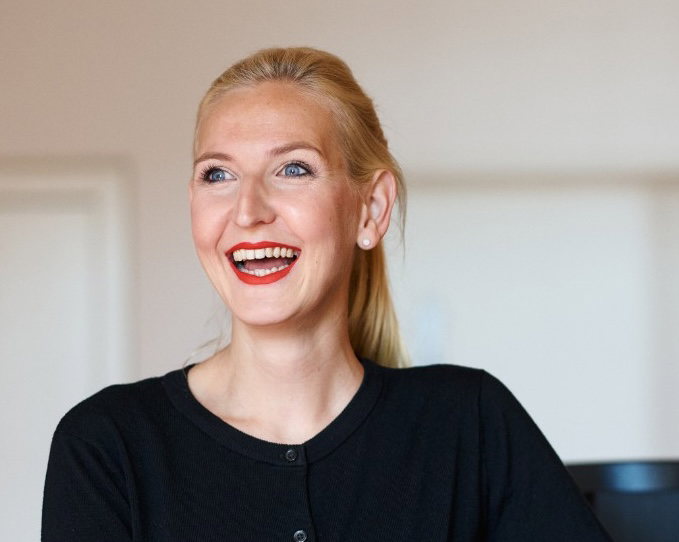
Katharina Neubert (LinkedIn) is Senior Vice President of Strategy & Investments at Holtzbrinck and Managing Director of the Holtzbrinck AI Hub in San Francisco. She supports Holtzbrinck’s portfolio companies in developing and implementing their AI strategies – from Springer Nature and Macmillan to DIE ZEIT – and builds bridges between Europe and Silicon Valley.